Historic Milestone: Zambia’s First Political Party Disability Inclusion Plans Launched
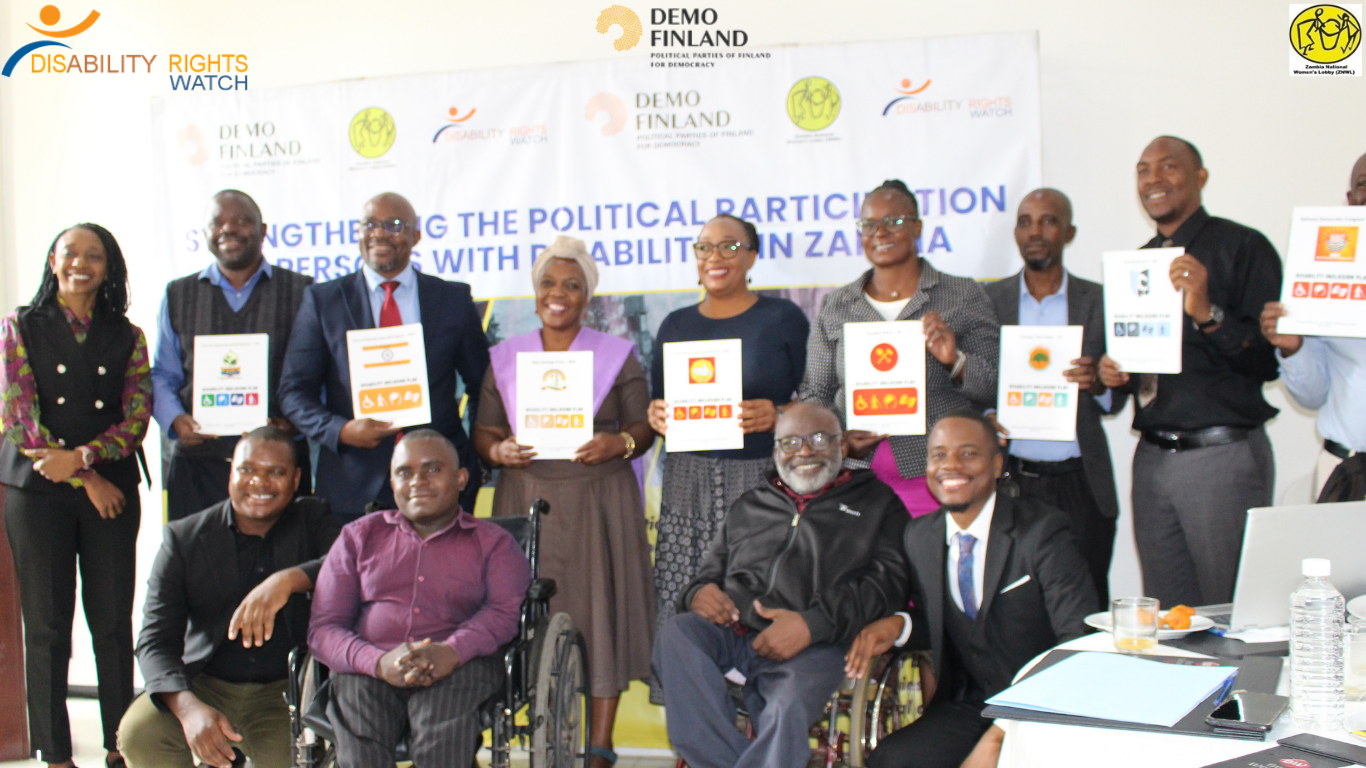
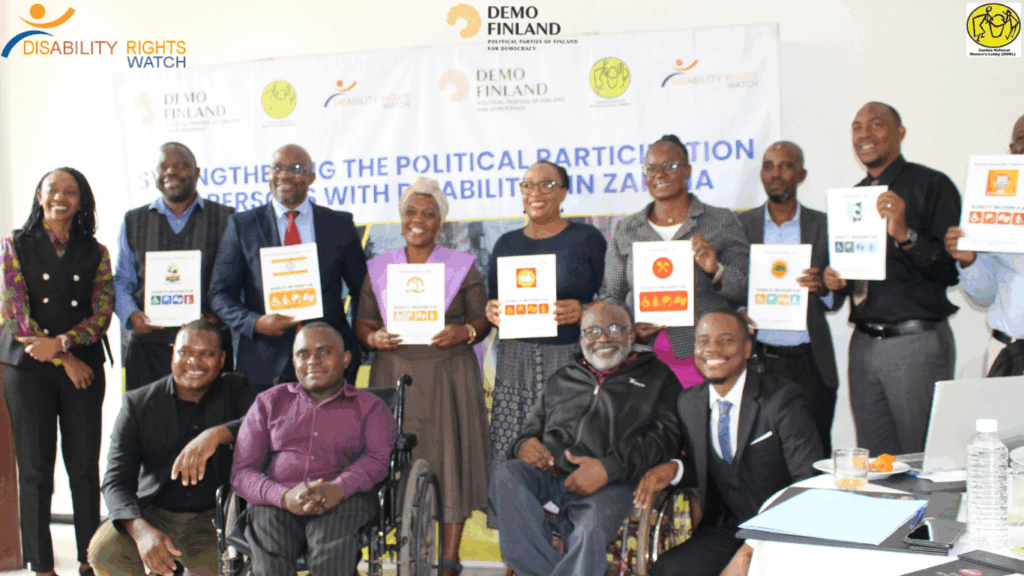
In a landmark achievement for inclusive governance, Disability Rights Watch (DRW), in partnership with Zambia National Women’s Lobby (ZNWL), and with support from Demo Finland and the Ministry for Foreign Affairs of Finland, successfully facilitated the development and launch of Disability Inclusion Plans across eight major political parties in Zambia. This milestone, achieved in December 2025 under the Disability Inclusion and Political Participation Programme, marks the first coordinated effort in the country’s political history to institutionalize disability inclusion within party structures and agendas.
The initiative represents a transformative shift in Zambia’s democratic landscape, placing persons with disabilities at the center of political participation and decision-making. For decades, political processes have remained largely inaccessible to persons with disabilities, often limiting their participation to the margins. Through this intervention, DRW, ZNWL, and their partners worked strategically with political actors to break systemic barriers and promote a more inclusive political environment that reflects the diversity of Zambian society.
The eight political parties that committed to disability inclusion through the development of structured and actionable plans include the United Party for National Development, Forum for Democracy and Development, Socialist Party, National Democratic Congress, Party for National Unity and Progress, New Heritage Party, Movement for Multi-party Democracy (New National Party), and Citizens First. Their participation signals a growing recognition across the spectrum of the need to uphold the rights of persons with disabilities and ensure their meaningful inclusion in governance processes.
At the core of this achievement was a comprehensive and consultative process led by DRW and ZNWL. The organizations facilitated capacity-building sessions, policy dialogues, and technical support tailored to political parties. These engagements enabled parties to critically assess their internal systems, identify gaps in accessibility and representation, and develop practical strategies to address them. The resulting Disability Inclusion Plans outline commitments to inclusive party structures, accessible communication, equitable candidate selection processes, and the active participation of persons with disabilities in leadership roles.
Demo Finland played a pivotal role in providing technical expertise and financial support, drawing on its global experience in strengthening democratic institutions and inclusive governance. Meanwhile, the Ministry for Foreign Affairs of Finland reinforced the initiative through its commitment to human rights, equality, and international development cooperation. Together, these partners ensured that the programme aligned with global best practices, including principles enshrined in the UN Convention on the Rights of Persons with Disabilities (UNCRPD).
The impact of this initiative extends beyond policy commitments. It has contributed to shifting attitudes within political parties and the broader public discourse, positioning disability inclusion as a fundamental democratic value rather than a peripheral concern. By embedding inclusion within party policies and operations, the programme has laid a foundation for more accessible political campaigns, inclusive voter engagement, and increased representation of persons with disabilities in elective and decision-making positions.
Importantly, this milestone comes at a critical time as Zambia prepares for future electoral processes. The adoption of Disability Inclusion Plans by multiple political parties signals a readiness to embrace inclusive politics and provides a model that can be replicated across the region. It also strengthens accountability, as parties are now expected to translate their commitments into tangible actions that improve the political participation of persons with disabilities.
As a trailblazer initiative in Zambia’s political history, this achievement underscores the power of collaboration between civil society, political actors, and international partners. Disability Rights Watch and Zambia National Women’s Lobby have demonstrated leadership in advancing disability rights and inclusive governance, while Demo Finland and the Ministry for Foreign Affairs of Finland have reinforced the importance of global solidarity in driving social change.
This historic step marks not the end, but the beginning of a sustained journey toward a truly inclusive democracy—one where persons with disabilities are fully recognized as equal participants, leaders, and decision-makers in shaping Zambia’s future.