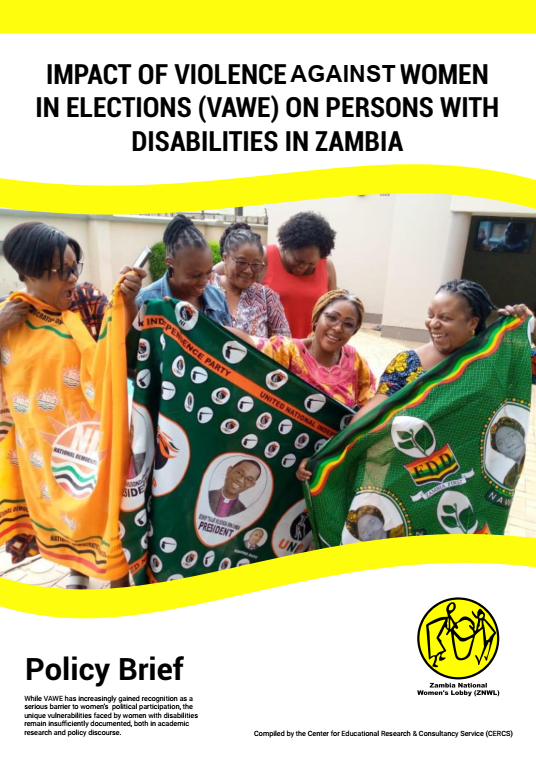
IMPACT OF VIOLENCE AGAINST WOMEN IN ELECTIONS (VAWE) ON PERSONS WITH DISABILITIES IN ZAMBIA
- Version
- Download 0
- File Size 3.35 MB
- File Count 1
- Create Date March 23, 2026
- Last Updated March 23, 2026
IMPACT OF VIOLENCE AGAINST WOMEN IN ELECTIONS (VAWE) ON PERSONS WITH DISABILITIES IN ZAMBIA
Women with disabilities in Zambia continue to face entrenched barriers that limit their full, safe, and equal
participation in electoral processes. This policy brief presents key findings from qualitative interviews with key
stakeholders and women with disabilities, complemented by existing literature and legal frameworks. The
evidence reveals that inaccessible polling stations, compromised voting autonomy, widespread intimidation, weak
enforcement of laws, exclusion by political parties, and non-responsive justice systems create a political
environment that systematically disadvantages women with disabilities. These vulnerabilities are exacerbated by
the lack of disability-disaggregated data, making their experiences largely invisible in formal electoral monitoring
and policymaking.
Despite Zambia’s strong legal commitments including the Persons with Disabilities Act, the Gender Equity and
Equality Act, and international obligations under CEDAW and the CRPD implementation gaps remain wide. Women
with disabilities frequently encounter structural barriers such as steep staircases, poorly designed polling layouts,
inaccessible information formats, and election officers with limited disability training. These factors combine to
compromise ballot secrecy, undermine autonomy, and expose women to heightened risks of Violence Against
Women in Elections (VAWE), including verbal abuse, intimidation, and social hostility. Moreover, political parties
rarely mainstream disability inclusion, limiting leadership opportunities and reinforcing systemic under
representation.
Addressing these challenges requires deliberate and well-coordinated reforms. The brief calls for improved
accessibility across polling stations, investment in inclusive voting materials, targeted capacity-building for ECZ
officers and police, disability-mainstreamed political party processes, accessible reporting pathways, and routine
disability-disaggregated data collection. Such interventions will strengthen Zambia’s democratic culture, uphold
human rights commitments, and ensure that no woman is left behind in political life. Policy Brief_ Impact of Violence aganst women in elections on persons with disabilities in Zambia_Final.